
Top Mistakes Students Make When Choosing Acting Classes in NYC

Updated: Sep 17
I have been training professional actors for over two decades, and have seen hundreds and hundreds of aspiring actors flush their money and time down the toilet with bad acting classes and second-rate teachers.
Many aspiring actors in New York City rush into NYC acting classes without understanding what separates a great acting studio from the mediocre. They enroll in a hodge-podge of classes, trust unqualified teachers, surround themselves with lazy classmates, or bypass fundamental acting training entirely.
One of the most common mistakes students make when choosing acting classes in NYC is assuming all training is equal. It isn’t. Not by a long shot.
If you really intend to work professionally, the classes and the acting studio you choose matter. It should develop your technique, your discipline, and your artistry. You should emerge as a well-trained actor and professional artist. Anything less than that is a waste.
At the Maggie Flanigan Studio, our acting classes in NYC are designed for aspiring actors who understand that professional success begins with rigorous, conservatory training.
This blog will outline the most common mistakes to avoid and what to look for if you are serious about becoming a skilled, working actor.

Key Takeaways
If your training isn’t difficult, it isn’t helping you.
Actors are built through discipline, craft, and hard work.
The best acting classes don’t teach performance. They provide technique and process.
Mistake #1: Choosing Hype Over Craft
Too many actors choose a program based on social media presence, branding, or celebrity association. They do not do their own due diligence to visit acting studios and interview with teachers.
Acting is an illumination of the human condition and demands vulnerability, dedication, and commitment to artistry. Your training should be preparing you to compete with the actors coming out of Yale, Juilliard, and NYU, and professional conservatories like MFS. This is where the industry looks for talent. If you aren’t working towards that, you are wasting your time.
The strongest acting classes in NYC are rarely flashy. They are rooted in a solid technique and a developed craft. They instill discipline, work ethic, and emotional truth. They give you a process that allows you to do truthfully under imaginary circumstances, and create organic, vivid, fully realized human behavior.
Attention, representation, and visibility come later if your work earns them. If you want to work into your seventies, lay the foundation first. The acting world is filled with talented people—only those with craft and discipline last.
Craft gets you started. Discipline keeps you going. Read more about why discipline matters for an actor.
Mistake #2: Ignoring the Fundamentals
Many actors want things to happen fast. This is absurd. It doesn't happen that way.
I interview so many twenty-somethings who will say to me that committing two to three years learning how to do something is too long. They are afraid their career is going to pass them by at 25. These people find out sooner or later that no one will take them seriously in this business if they can't consistently do excellent work. They end up being the hacks of the profession.
If you cannot listen fully, respond spontaneously, and remain grounded from moment to moment, you are not fundamentally sound as an actor. And without a process, your work will fall apart under pressure, especially in professional environments where consistency matters.
A serious artist masters their instrument, their body, voice, and temperament. If you want to be a transformational, successful actor, then hard work on yourself is non-negotiable. These are not advanced concepts. They are the foundation that supports all meaningful work.
Classes that allow students to bypass this stage in favor of “fun” or performative improv work are doing a serious disservice. Most of the acting in this country sucks because of this. Serious acting training gives you a consistent way of working, so that every single time you have the opportunity to act, you are interesting and compelling to watch.
Mistake #3: Taking Classes That Are Too Big
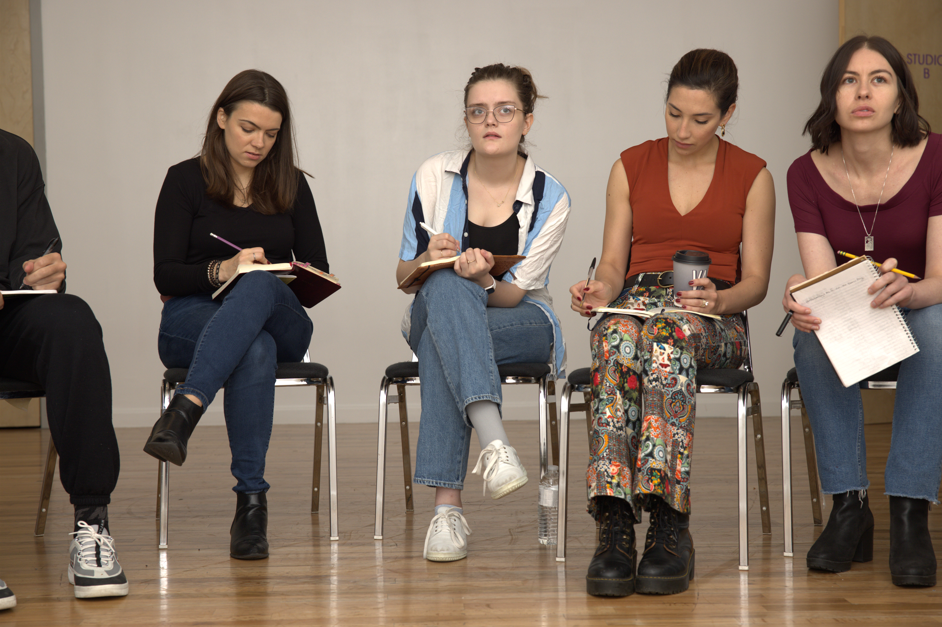
If you are one of twenty or more students in a class, you are just a number, crammed into a space to pay the studio’s rent. You will most likely work infrequently and be surrounded by unserious classmates.
The best studios practice real discretion when selecting students to teach. I personally interview every single person who applies to MFS. If you aren’t serious or passionate, if you do not have a willingness to be taught, and if you aren’t willing to bust your ass, I will not teach you. What I offer is too valuable to be wasted on the lazy.
Many NYC acting classes operate like factories and are no more than crowded rooms, with teachers who need to rush through everyone’s work and offer quick, superficial notes. There is little opportunity for sustained feedback, no individualized attention, and no real relationship with a teacher who understands how to train professional actors.
Acting, and all art for that matter, must be personal. Sustained growth requires consistent time on your feet and direct guidance from a master teacher. Without that, you are pissing your money away.
At the Maggie Flanigan Studio, classes are intentionally small. My students are taught not just collectively, but individually. I am not just a teacher; I am their mentor, and I take very seriously the responsibility that comes with developing an artist.
Mistake #4: Settling for Teachers Who Don’t Teach
I believe that teaching is an art form. I also believe that few teachers think this way. I have dedicated the last twenty years to the art of teaching. During my first eight years as Maggie’s teaching protege, I watched over 5,500 hours of teaching. I was obsessed and passionate about not just the Meisner Technique, but also with artistry.
Few actors possess it. Training and developing actors requires skill, clarity, patience, and the ability to create a safe, nurturing, and supportive space, while also having the highest standards.
If a teacher lectures endlessly, humiliates students, or offers vague criticism without tools for improvement, that is a red flag. The best acting teachers must work hard to check their egos.
I believe that a serious aspiring actor should seek out a master teacher, not a frustrated actor who is pulling out notes from classes they took ten years ago. A master teacher has put in their 10,000 hours and has the capacity to inspire as well as challenge their students.
I do not accept anyone’s second best. Most people do just enough to get by. That is not acceptable in my classroom. The most successful people in life are the ones who work the hardest. A real teacher pushes you beyond your comfort zone and challenges to go beyond what you think is possible.
Never settle for a class that is led by a hack.
Mistake #5: Focusing on Results Instead of Process
Many students fixate on auditions and industry professionals, including agents and casting directors, before they even know how to act. That approach guarantees failure. You only get one chance to make a first impression. Why would you think it’s a good idea to put yourself out there as a serious actor when you have no idea what to do?
Careers are not built by chasing the pop-culture superficiality of fame and celebrity. If that is your driving force, you are going to be monumentally disappointed. Careers are built by mastering craft through rigorous study.
If you cannot live truthfully in the moment, respond fully, and create vivid behavior, none of the external markers matter. The strongest acting classes teach process, not results.
There are no shortcuts. Learn the work, and the career will follow. This is what separates experienced actors from those who burn out early.
Mistake #6: Confusing Acting for Film with Acting Training
On-camera classes are not a substitute for acting training. Film technique is technical—it does not create truth. I hear dozens of aspiring actors talk about wanting to be a film actor, and foolishly believe that on-camera classes are going to teach them how to act. It will not happen.
Whether it’s stage or camera, acting is acting, and the fundamentals are the same. Creating behavior is the actor's job. It’s the medium and the technique that change. The camera reveals what already exists. If you lack presence, connection, or honest behavior, the lens will expose it.
Many actors turn to film classes believing they offer a shortcut. They do not. Craft comes first.
Real training builds behavior through discipline and repetition. Once that foundation exists, it can be applied to film, television, or the stage. Master the work. The medium comes later.
Mistake #7: Avoiding the Hard Work
Some actors want confidence without any discomfort or the experience of colossal failure. They seek progress without risk. That is not how an artist’s life functions.
Acting requires discipline and vulnerability. You must step beyond comfort, remain focused, and risk something personal every time you work. If not, why should anyone ever bother to watch you?
If class feels easy, it is not training you. Serious, professional acting classes challenge habits, confront avoidance, and demand accountability.
There are no shortcuts here. Growth is earned through hard work and the ability to navigate creative frustration and struggle.
Mistake #8: Choosing a Class That Lacks Structure
If your class feels like a collection of unrelated exercises, you could get into a BA 101 acting class, but you are wasting your time. Serious training should follow a clear conservatory structure. Beyond acting training, you should be able to take classes in voice, movement, script analysis, breathwork, clown, classical text, theater history, and film history. You should seek out MFA-caliber acting training.
Without structure, actors accumulate general experience without developing serious technique and craft. A real acting program teaches focus, consistency, and long-term development.
Whether working in Meisner or another acting technique, the training must actually teach you how to create organic human behavior. Choose an NYC acting studio designed to build a career.
Mistake #9: Overlooking the Studio Environment
The room matters. Training is shaped by the energy, expectations, and integrity of the studio and its artistic director.
Many classes function like social spaces or peer-judged workshops. When students critique one another instead of working under a clear teacher’s guidance, risk disappears and honesty shuts down.
You need an environment where actors are serious, teachers lead with clarity and authority, and the work is protected. The right studio supports growth by demanding focus and accountability.
Your surroundings either support the work or undermine it.
Mistake #10: Thinking Short-Term Instead of Long-Term
Acting is a profession. Yet many students treat classes casually. Teachers allow students to come late and even unprepared. If you have sat in classes like this, it can be very frustrating. I demand that everyone in my studio conduct themselves as a professional student. I even have a big sign on the door into class that describes what that means.
You want a teacher who does not tolerate laziness.
Strong acting programs are designed for the long haul. They build discipline, depth, and professional habits. If you want a career, think in decades, not years. Commit to a program that demands seriousness and sustained effort.
Show up. Do the work. Commit. Everything else follows.
What Real Acting Training Looks Like
Serious, professional acting training is not about performance. It is about developing the artist.
I believe that the Meisner Technique is one of the greatest ways to train an actor. It trains listening, vivid crafting, and emotional fluidity. These are the skills that form the foundation of all truthful acting.
A serious acting studio develops the entire instrument:
Repetition and moment-to-moment work
Scene study that demands a workout of the human heart
Voice and movement training for freedom and clarity
Script analysis that develops artistic thinking
Tools for monologues, auditions, and on-camera adjustment
This is how actors learn depth, integrity, and truth. Real actors train. Hacks don’t.
Why Serious Actors Train at Maggie Flanigan Studio

Many actors arrive in New York believing a few classes and some headshots will suffice. They move from studio to studio chasing results without structure. That approach does not last.
Professional work requires discipline, accountability, and real craft. At the Maggie Flanigan Studio, we train artists. Our programs are rooted in the Meisner Technique because it teaches actors to live truthfully and create behavior.
We offer a Six-Week Summer Intensive and a Two-Year Conservatory for actors committed to long-term growth. Training includes voice, movement, scene study, breathwork, on-camera work, script analysis, and more.
This is not a drop-in space. It is a place for focused, disciplined work with teachers who expect your best. Schedule an interview to see if the training is right for you.
Conclusion
The greatest mistake actors make is assuming that acting is easy. It is not.
Acting requires discipline, patience, and the willingness to fail. If you are chasing shortcuts, you are not training.
Many actors bounce between NYC classes, hoping private lessons or industry tips will be enough. They are not.
You need serious training that develops technique and craft. This is how actors learn to work with integrity and resilience.
You do not coast into this profession. You train for it. Let the work shape the actor you are meant to become.
A career in acting asks a lot of you. Our blog on artistic devotion asks you to consider what makes that commitment worth it.
Frequently Asked Questions
What are the 3 C’s of acting?
Commitment, clarity, and connection. These are built through structured, disciplined training.
What is the weakest position for an actor?
Seeking approval. If you’re working to please the audience, your scene partner, or fellow actors, you’ve lost your sense of truth. The strongest actors bring themselves fully to the work and let go of the need to be liked.
What are the 4 P’s of acting?
Preparation, presence, purpose, and patience.
What’s the best way to start an acting career?
Get professionally trained.
How do I find the best acting classes?
Ask around. Apply to and interview at serious studios. Tour the space. Meet the teacher.
What should aspiring actors look for in an acting school?
High standards, working alumni, a master teacher, and a supportive community where prospective students are treated with seriousness and respect.
What makes a good acting teacher?
A master of their craft. Experienced instructors with high standards who demand hard work and provide a safe, nurturing environment that encourages risk and supports failure. They must also know how to teach acting with clarity and purpose.
Do I need an acting coach or an acting class?
Both. Coaching supports specific needs. Classes build the craft.
What acting skills should serious actors focus on first?
Listening, emotional availability, and moment-to-moment presence. These acting skills are built through repetition, discipline, and real training, not tricks or shortcuts.
Curious what else develops through serious training? Take a look at our guide to the key skills actors build in class.



Comments